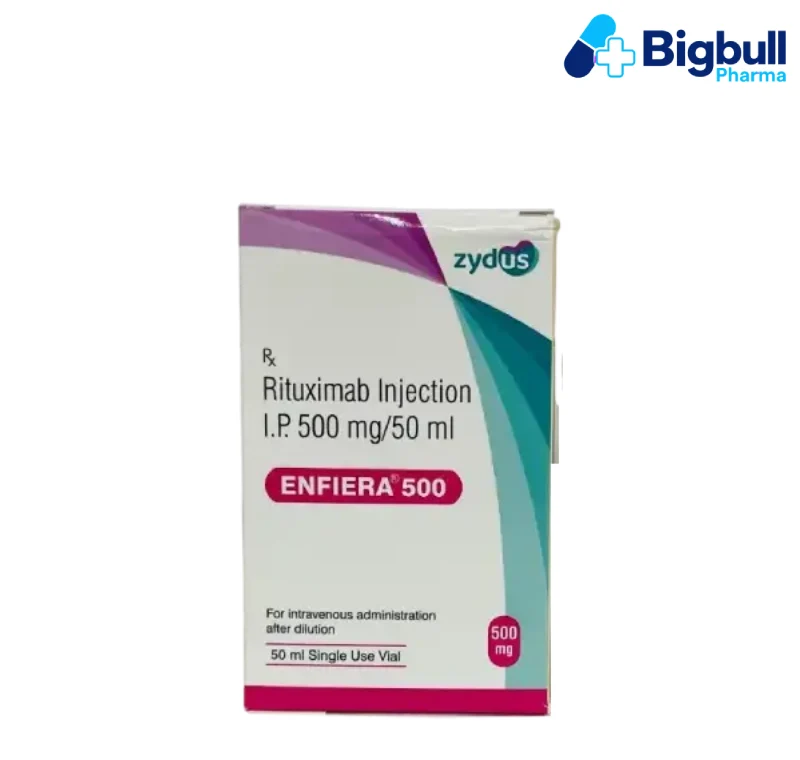
RITUXIMAB 500 mg/50 mL (Enfiera) Injection

RITUXIMAB 500 mg/50 mL (Enfiera) Injection

$550.00 $280.00
Prescription Required

RITUXIMAB 500 mg/50 mL (Enfiera) Injection is a prescription monoclonal antibody used to treat certain blood cancers and autoimmune diseases. It is commonly prescribed for conditions such as non-Hodgkin lymphoma, chronic lymphocytic leukemia (CLL), rheumatoid arthritis, and selected autoimmune disorders.

Generic name RITUXIMAB
Strength 500 mg
Manufacturer Zydus
Package size 1 Vial
Used for Non-Hodgkin lymphoma, chronic lymphocytic leukemia (CLL), rheumatoid arthritis, and selected autoimmune disorders
Availability In Stock
Shipping to USA, UK, Australia, Canada, New Zealand, Philippines, Tunisia, France, Italy, South Korea, Albania, Romania, Hong Kong, Malaysia, Thailand, Singapore, UAE, Georgia, Armenia, Saudi Arabia, Qatar, Kuwait, South Africa, and many other countries.

Enquire via WhatsApp

Uses of RITUXIMAB 500 mg

  • Treats non-Hodgkin lymphoma
  • Treats chronic lymphocytic leukemia (CLL)
  • Treats rheumatoid arthritis with other medications
  • Treats certain autoimmune disorders, such as granulomatosis with polyangiitis (GPA) and microscopic polyangiitis (MPA)
  • Used as part of combination treatment regimens

Benefits of RITUXIMAB

  • Targets abnormal B cells with precision
  • Helps slow the progression of blood cancers
  • Reduces symptoms of autoimmune diseases
  • Can improve long-term treatment outcomes
  • Effective when combined with other therapies

How Does RITUXIMAB 500 mg Work?

Rituximab 500 mg works by targeting the CD20 protein found on the surface of B lymphocytes (B cells). It binds to these cells and triggers their destruction by the immune system. This helps eliminate cancerous B cells and reduces the abnormal immune response in autoimmune diseases.

Side Effects

  • Infusion-related reactions
  • Fever
  • Chills
  • Fatigue
  • Nausea
  • Headache
  • Increased risk of infections
  • Skin rash

Precautions

  • Administer only under the supervision of a healthcare professional.
  • Patients should be monitored during and after the infusion for allergic or infusion-related reactions.
  • Inform your doctor if you have hepatitis B, heart disease, or active infections.
  • Regular blood tests may be required during treatment.
  • Tell your healthcare provider about all medications and vaccines you are taking or planning to receive.
  • Inform your doctor if you are pregnant, planning pregnancy, or breastfeeding.
  • Seek immediate medical attention if you develop signs of a serious infection, breathing difficulties, or severe skin reactions.

Author

Reviewed By

Dr. Neeru Mehta

Doctor of Medicine (MD) | Professional Interest in Oncology

Dr. Neeru Mehta holds a Doctor of Medicine (MD) degree and has a professional interest in oncology and cancer care. Her interests include cancer treatments, monitoring treatment progress, managing side effects and supportive care.

Enquire via WhatsApp