 Prescription Required
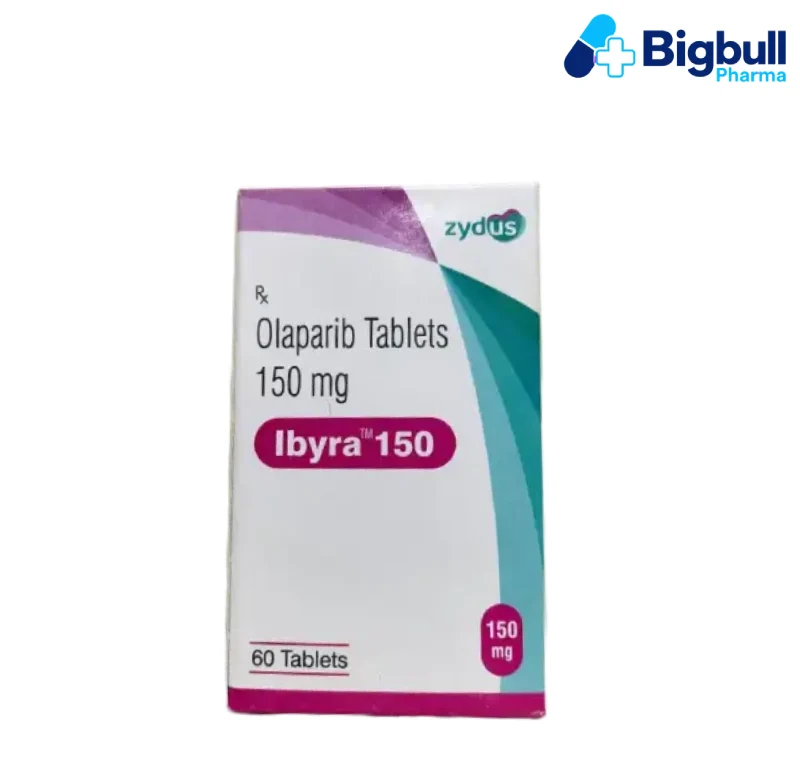
OLAPARIB 150 mg (Ibyra) is a prescription targeted anticancer medication used to treat certain BRCA-mutated and homologous recombination repair (HRR) gene-mutated cancers, including ovarian, breast, pancreatic, and prostate cancers. It belongs to a class of medicines called PARP inhibitors, which help prevent cancer cells from repairing damaged DNA, leading to their death while minimizing damage to healthy cells.
| Generic name | OLAPARIB |
| Strength | 150 mg |
| Manufacturer | Natco |
| Package size | 60 Tablets |
| Used for | Ovarian, breast, pancreatic, and prostate cancers |
| Availability | In Stock |
| Shipping to | USA, UK, Australia, Canada, New Zealand, Philippines, Tunisia, France, Italy, South Korea, Albania, Romania, Hong Kong, Malaysia, Thailand, Singapore, UAE, Georgia, Armenia, Saudi Arabia, Qatar, Kuwait, South Africa, and many other countries. |
Olaparib 150 mg works by blocking poly (ADP-ribose) polymerase (PARP) enzymes, which help repair damaged DNA in cells. Cancer cells with BRCA or certain HRR gene mutations rely heavily on PARP for survival. By inhibiting these enzymes, olaparib prevents DNA repair, causing cancer cells to accumulate damage and eventually die.

Dr. Neeru Mehta holds a Doctor of Medicine (MD) degree and has a professional interest in oncology and cancer care. Her interests include cancer treatments, monitoring treatment progress, managing side effects and supportive care.