 Prescription Required
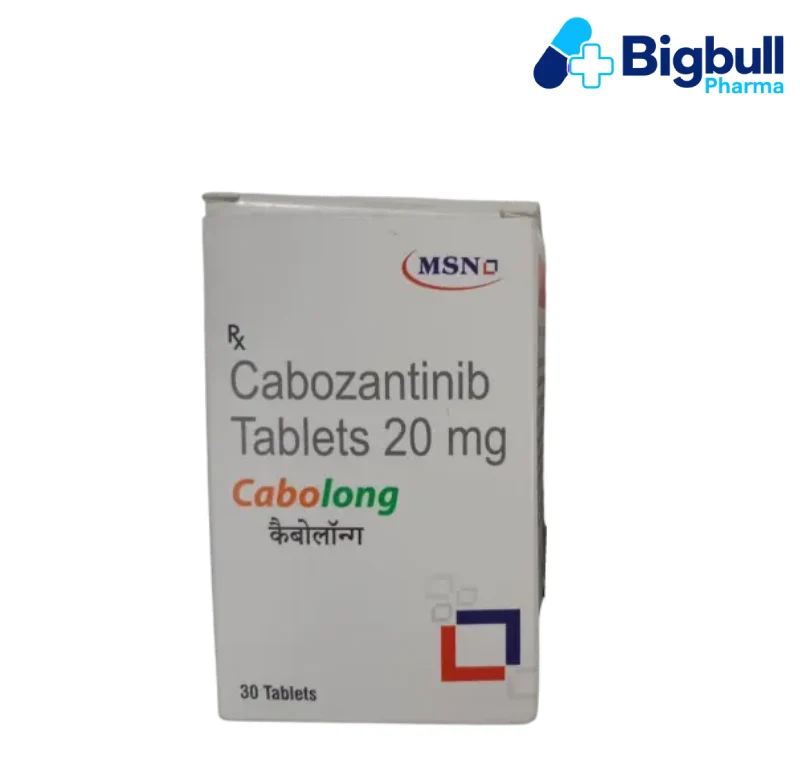
Cabozantinib 20 mg (Cabolong) is a targeted anticancer medicine used to treat certain advanced cancers, including kidney cancer (renal cell carcinoma), liver cancer (hepatocellular carcinoma), and differentiated thyroid cancer. It works by blocking proteins that promote cancer cell growth and the formation of new blood vessels, helping slow tumour progression.
| Generic name | Cabozantinib |
| Strength | 20 mg |
| Manufacturer | MSN Laboratories |
| Package size | 30 Tablets |
| Used for | Kidney cancer (renal cell carcinoma), liver cancer (hepatocellular carcinoma), and differentiated thyroid cancer |
| Availability | In Stock |
| Shipping to | USA, UK, Australia, Canada, New Zealand, Philippines, Tunisia, France, Italy, South Korea, Albania, Romania, Hong Kong, Malaysia, Thailand, Singapore, UAE, Georgia, Armenia, Saudi Arabia, Qatar, Kuwait, South Africa, and many other countries. |
Cabozantinib is a tyrosine kinase inhibitor (TKI). It works by blocking multiple proteins, including MET, VEGFR, and AXL, which are involved in cancer cell growth, spread, and blood vessel formation. This helps slow tumour growth and limits the cancer’s ability to spread.

Dr. Neeru Mehta holds a Doctor of Medicine (MD) degree and has a professional interest in oncology and cancer care. Her interests include cancer treatments, monitoring treatment progress, managing side effects and supportive care.