 Prescription Required
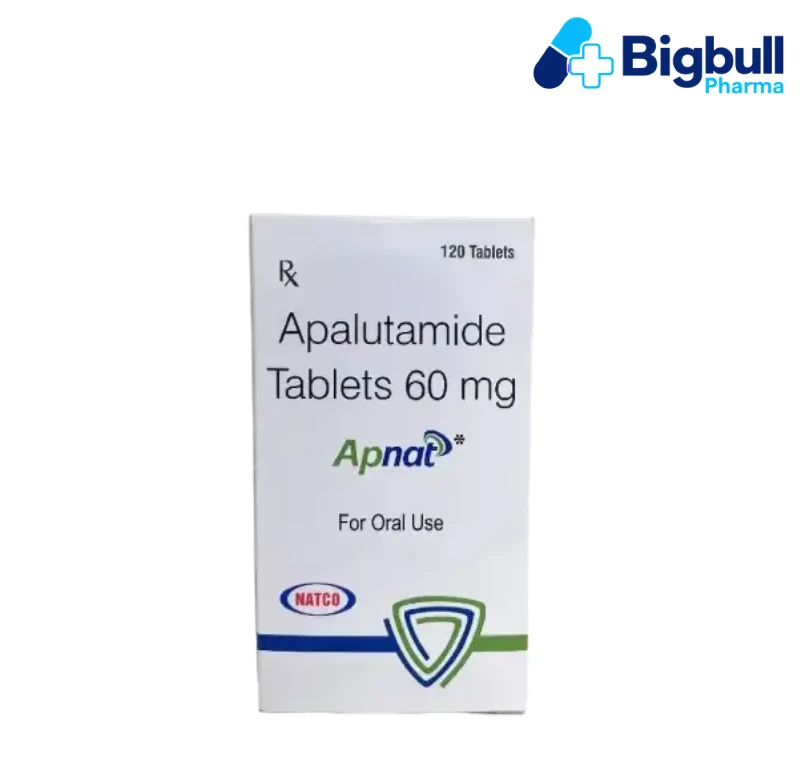
Apalutamide 60 mg (Apnat) is an oral anticancer medicine used to treat prostate cancer in men. It is commonly prescribed for non-metastatic castration-resistant prostate cancer (nmCRPC) and metastatic castration-sensitive prostate cancer (mCSPC). Apalutamide helps slow the growth and spread of cancer by blocking the effects of male hormones (androgens) that fuel prostate cancer cells.
| Generic name | Apalutamide |
| Strength | 60 mg |
| Manufacturer | Natco |
| Package size | 120 Tablets |
| Used for | Prostate cancer |
| Availability | In Stock |
| Shipping to | USA, UK, Australia, Canada, New Zealand, Philippines, Tunisia, France, Italy, South Korea, Albania, Romania, Hong Kong, Malaysia, Thailand, Singapore, UAE, Georgia, Armenia, Saudi Arabia, Qatar, Kuwait, South Africa, and many other countries. |
Apalutamide is an androgen receptor inhibitor. It works by blocking androgen receptors on prostate cancer cells, preventing testosterone and other male hormones from stimulating cancer growth. This slows the multiplication and spread of prostate cancer cells.

Dr. Neeru Mehta holds a Doctor of Medicine (MD) degree and has a professional interest in oncology and cancer care. Her interests include cancer treatments, monitoring treatment progress, managing side effects and supportive care.