 Prescription Required
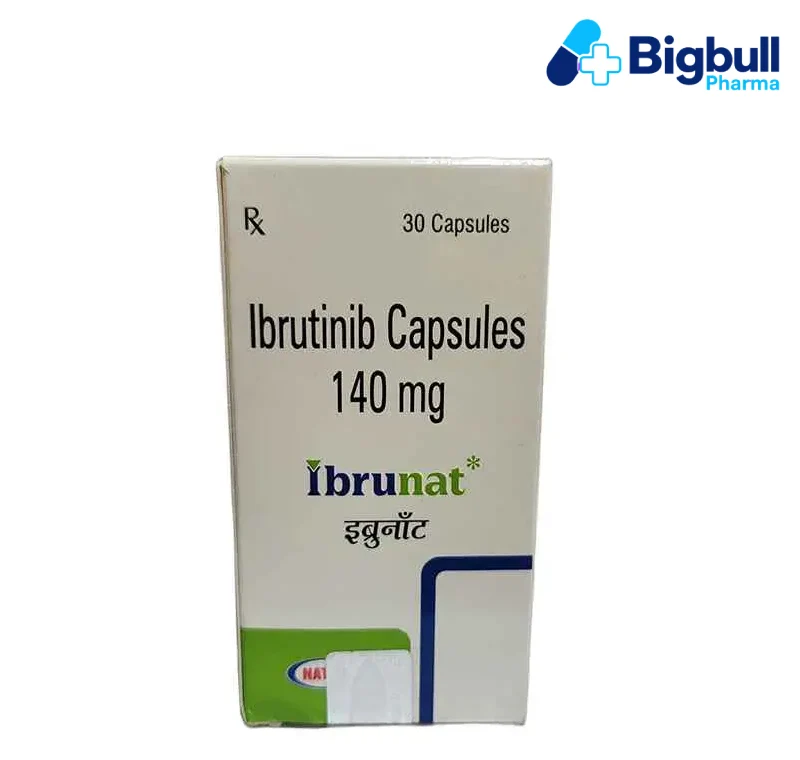
Ibrutinib 140 mg (Ibrunat) is a targeted anticancer medicine used to treat certain blood cancers, including chronic lymphocytic leukaemia (CLL), mantle cell lymphoma (MCL), Waldenström macroglobulinaemia (WM), and other approved conditions. It works by blocking a protein called Bruton’s tyrosine kinase (BTK), which helps cancer cells grow and survive. This slows the growth and spread of cancer cells.
| Generic name | Ibrutinib |
| Strength | 140 mg |
| Manufacturer | Natco |
| Package size | 30 Capsules |
| Used for | Chronic lymphocytic leukaemia (CLL), mantle cell lymphoma (MCL), Waldenström macroglobulinaemia (WM) |
| Availability | In Stock |
| Shipping to | USA, UK, Australia, Canada, New Zealand, Philippines, Tunisia, France, Italy, South Korea, Albania, Romania, Hong Kong, Malaysia, Thailand, Singapore, UAE, Georgia, Armenia, Saudi Arabia, Qatar, Kuwait, South Africa, and many other countries. |
Ibrutinib is a Bruton’s tyrosine kinase (BTK) inhibitor. It blocks the BTK protein, which plays a key role in the growth and survival of abnormal B cells. By inhibiting BTK, Ibrutinib helps stop cancer cells from multiplying and promotes their destruction.

Dr. Neeru Mehta holds a Doctor of Medicine (MD) degree and has a professional interest in oncology and cancer care. Her interests include cancer treatments, monitoring treatment progress, managing side effects and supportive care.