 Prescription Required
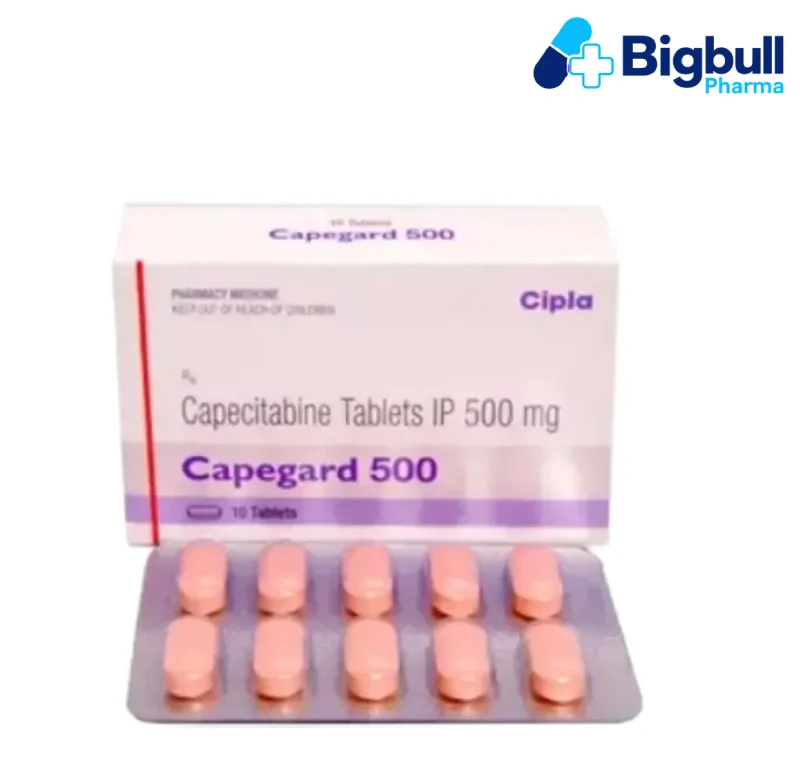
Capecitabine 500 mg (Capegard 500) is an oral chemotherapy medicine used to treat various types of cancer, including breast cancer, colorectal cancer, and gastric (stomach) cancer. It is converted into its active form inside the body, where it targets and destroys cancer cells while helping slow the growth and spread of tumours.
| Generic name | Capecitabine |
| Strength | 500 mg |
| Manufacturer | Cipla |
| Package size | 10 Tablets |
| Used for | Breast cancer, colorectal cancer, and gastric (stomach) cancer |
| Availability | In Stock |
| Shipping to | USA, UK, Australia, Canada, New Zealand, Philippines, Tunisia, France, Italy, South Korea, Albania, Romania, Hong Kong, Malaysia, Thailand, Singapore, UAE, Georgia, Armenia, Saudi Arabia, Qatar, Kuwait, South Africa, and many other countries. |
Capecitabine is an antimetabolite chemotherapy medicine. It is converted in the body into 5-fluorouracil (5-FU), which interferes with the production of DNA and RNA in cancer cells. This prevents the cells from growing and dividing, leading to their destruction.

Dr. Neeru Mehta holds a Doctor of Medicine (MD) degree and has a professional interest in oncology and cancer care. Her interests include cancer treatments, monitoring treatment progress, managing side effects and supportive care.